Digital Marketing Agency

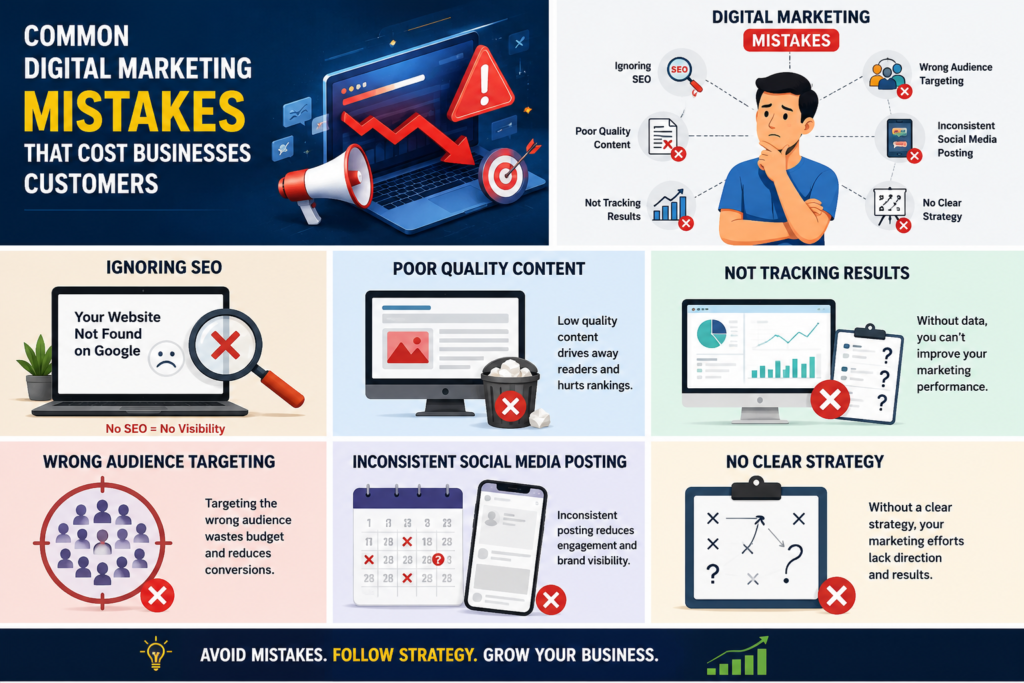
Illustration showing common digital marketing mistakes such as poor SEO, weak social media strategy, ineffective paid advertising, and low website conversions affecting business growth.
Digital Marketing, Digital Marketing Agency, SEO

Common Digital Marketing Mistakes That Cost Businesses Customers

Digital marketing can help businesses attract new customers, increase brand awareness, and generate consistent revenue. However, many businesses struggle to achieve results because they make avoidable marketing mistakes. A poorly planned strategy can waste advertising budgets, reduce website traffic, and lower conversion rates. The good news is that most of these problems can be fixed with the right approach. In this guide, we’ll cover the most common digital marketing mistakes and explain how to avoid them to improve your online growth. 1. Ignoring Search Engine Optimization (SEO) Many businesses build a website and expect customers to find them automatically. Without SEO, your website may never appear on the first page of search results. Common SEO mistakes include: Not researching keywords Publishing low-quality content Slow website speed Missing meta titles and descriptions Broken links 2. Not Understanding Your Target Audience Trying to market to everyone often results in poor engagement. Successful businesses understand exactly who their ideal customers are. Ask questions like: Who needs your service? What problems do they face? Which platforms do they use? What motivates them to buy? How to Fix It Create detailed customer personas. Research competitors. Use analytics to understand customer behavior. Develop content that solves real problems.   3. Having No Clear Marketing Strategy osting randomly on social media or running ads without a plan rarely produces consistent results. Without goals, it’s impossible to measure success. How to Fix It Create a digital marketing strategy that includes: Business goals Target audience Content plan SEO strategy Paid advertising 4. Ignoring Mobile Users More than half of internet traffic comes from mobile devices. If your website is difficult to use on a smartphone, visitors will leave quickly. Common issues include: Small text Slow loading pages Buttons that are hard to tap Poor navigation https://www.youtube.com/watch?v=XHOmBV4js_E 5. Creating Low-Quality Content Content is one of the strongest tools for attracting customers. Many businesses publish articles that are too short, copied from other websites, or provide little value. How to Fix It Create original content that answers customer questions. Write detailed blog posts. Use images, videos, and infographics. Update outdated content regularly. 6. Posting Inconsistently on Social Media Customers expect businesses to stay active online. Long periods without posting can reduce engagement and brand visibility. How to Fix It Create a monthly content calendar. Post consistently. Mix educational, promotional, and entertaining content. Respond to comments and messages quickly. Click here

Email marketing concept showing a laptop screen with email campaign dashboard, open rate and click-through analytics, newsletter design templates, and automation workflow. The visual represents email marketing strategies used to increase sales, customer engagement, and business growth in digital marketing.
#EmailCampaign, brand awareness, Digital Marketing Agency, Uncategorized

Email Marketing Strategies That Increase Sales

In today’s competitive digital landscape, email marketing remains one of the most powerful and cost-effective ways to connect with customers, generate leads, and increase sales. When executed strategically, email marketing can help businesses build stronger relationships, nurture prospects, and drive consistent revenue growth. 1. Personalize Every Customer Interaction Modern consumers expect personalized experiences. Using customer data such as names, purchase history, browsing behavior, and preferences allows businesses to create highly targeted email campaigns. Personalized emails not only improve engagement but also increase the likelihood of conversions.

Split-screen digital marketing infographic comparing Google Ads and SEO. Left side shows PPC advertising with paid search ads, performance charts, and campaign dashboard. Right side shows SEO with organic search rankings, keyword optimization, and traffic growth graphs. Title reads “Google Ads vs SEO: Which Is Better for Your Business?” in a modern corporate design with blue, white, and orange colors.
brand awareness, Digital Marketing Agency, Uncategorized

Google Ads vs SEO: Which Is Better for Your Business?

In today’s competitive digital landscape, businesses need effective online marketing strategies to attract customers and increase revenue. Two of the most popular approaches are Google Ads and SEO services. While both can drive traffic and generate leads, they work in different ways and offer unique advantages. Understanding the differences can help you choose the right strategy for your business. What Are Google Ads? Google Ads is Google’s online advertising platform that allows businesses to display ads on search engine results pages and across Google’s network. Through PPC advertising (Pay-Per-Click), advertisers only pay when someone clicks on their ad. Benefits of Google Ads Immediate visibility on search results. Highly targeted campaigns based on keywords, location, demographics, and interests. Flexible budgeting and measurable results. Ideal for promotions, product launches, and short-term campaigns. Drawbacks of Google Ads Costs can increase in competitive industries. Traffic stops when the advertising budget runs out. Requires ongoing optimization to maintain performance.   What Are SEO Services? SEO services focus on improving a website’s organic search rankings. By optimizing content, website structure, and technical elements, businesses can attract visitors naturally through search engines.   Benefits of SEO Services Generates long-term, sustainable traffic. Builds credibility and trust with users. Provides a higher return on investment over time. Continues delivering results even without ongoing ad spend. Drawbacks of SEO Services Results take time to appear. Requires consistent content creation and optimization. Search engine algorithms frequently change.   Google Ads vs SEO: Key Differences Google Ads Immediate     Pay per click     Sponsored search results     Stops when budget ends     Moderate SEO Services Long-term     Ongoing optimization investment     Organic search results     Continues generating traffic over time     High Which Option Is Better for Your Business? Choose Google Ads if you need fast results, immediate leads, or want to promote a time-sensitive offer. Choose SEO services if you want sustainable growth, long-term visibility, and stronger brand authority. For many businesses, combining PPC advertising with SEO creates the best results. Google Ads can generate immediate traffic while SEO builds long-term organic growth.   Conclusion Both Google Ads and SEO services are valuable digital marketing tools. If your goal is quick visibility and immediate conversions, PPC advertising through Google Ads may be the better choice. If you’re focused on long-term growth and organic traffic, investing in professional SEO services can provide lasting benefits. A balanced strategy that combines both often delivers the strongest return on investment and helps businesses achieve sustainable success online.

How Social Media Marketing Increases Brand Awareness in 2026
brand awareness, Digital Marketing Agency, Uncategorized

How Social Media Marketing Increases Brand Awareness

In today’s digital world, social media has become one of the most powerful marketing tools for businesses. With billions of active users across platforms such as Facebook, Instagram, LinkedIn, X, and TikTok, businesses have more opportunities than ever to connect with their target audience. Social media marketing is no longer just about posting content. It is about building relationships, increasing visibility, and creating a strong brand presence online. A well-planned social media strategy helps businesses reach potential customers, engage with their audience, and establish long-term brand recognition. What Is Social Media Marketing? Social media marketing involves using social media platforms to promote products, services, and brands. It includes creating content, engaging with followers, running advertising campaigns, and analyzing performance metrics. The primary goals of social media marketing are: Increase brand awareness Drive website traffic Generate leads Build customer loyalty Improve customer engagement Why Brand Awareness Matters Brand awareness refers to how familiar people are with your business and its products or services. When customers recognize and trust your brand, they are more likely to: Visit your website Follow your social media pages Recommend your business Purchase your products or services  Social Media Expands Your Reach One of the biggest advantages of social media marketing is the ability to reach a large audience quickly. Every post, comment, share, and interaction increases your brand’s visibility. Benefits include: Greater online exposure Increased audience reach More website visitors Improved brand recognition Builds Strong Customer Relationships Social media allows businesses to communicate directly with customers. Unlike traditional advertising, social media creates two-way conversations. Businesses can: Respond to comments Answer questions Address concerns Collect feedback Consistent Branding Creates Recognition Consistency is key to increasing brand awareness. Using the same: Logo Brand colors Messaging Visual style Tone of voice Across all social media platforms helps customers recognize your brand instantly. A consistent social media strategy creates a professional image and improves brand recall. High-Quality Content Attracts Attention Content is the foundation of social media marketing success. Businesses that consistently share valuable content attract more engagement and followers. Popular content types include: Educational posts Industry tips Videos Infographics Customer testimonials Behind-the-scenes content Quality content positions your business as a trusted authority in your industry. Social Proof Builds Credibility Consumers often trust recommendations and reviews from other customers. Social media provides opportunities to showcase: Customer reviews Success stories User-generated content Testimonials Positive social proof helps build trust and encourages new customers to engage with your brand. Social Media Advertising Boosts Visibility Organic reach is important, but paid social media advertising can significantly increase brand awareness. Platforms offer advanced targeting options based on: Age Location Interests Behaviors Demographics This allows businesses to reach highly relevant audiences and maximize advertising effectiveness. Encourages Content Sharing One of the most powerful aspects of social media marketing is content sharing. When users share your content, your brand reaches new audiences without additional advertising costs. Shared content can: Increase exposure Improve credibility Drive traffic Generate leads The more engaging your content is, the greater its potential reach. Measuring Brand Awareness Success Social media platforms provide valuable insights that help businesses track performance. Important metrics include: Reach Impressions Engagement rate Follower growth Website clicks Shares and mentions Regular analysis helps businesses refine their social media strategy and improve results. Best Practices for Social Media Brand Awareness To maximize brand awareness, businesses should: Post consistently Use high-quality visuals Engage with followers Create valuable content Use relevant hashtags Monitor analytics Stay updated with trends A strategic approach delivers better long-term results than random posting.   Conclusion Social media marketing is one of the most effective ways to increase brand awareness in 2026. It helps businesses reach larger audiences, build customer relationships, establish credibility, and create lasting brand recognition. By implementing a strong social media strategy, businesses can improve visibility, attract potential customers, and support long-term growth. Companies that consistently invest in social media marketing are better positioned to compete, engage their audience, and strengthen their brand presence in the digital marketplace

Digital Marketing Agency, SEO, Uncategorized

10 Proven SEO Strategies to Rank Higher on Google

In today’s competitive digital landscape, ranking on the first page of Google is essential for attracting customers and growing your business. Search Engine Optimization (SEO) helps websites improve visibility, increase organic traffic, and generate high-quality leads. By implementing the right SEO strategies, businesses can achieve long-term success and stay ahead of their competitors. 1.Conduct Thorough Keyword Research Keyword research is the foundation of successful SEO. Identify the terms and phrases your target audience uses when searching for products or services. Focus on long-tail keywords with strong search intent and lower competition to improve your chances of ranking higher. 2. Optimize Title Tags and Meta Descriptions Your title tag and meta description are often the first things users see in search results. Include your primary keyword naturally and create compelling descriptions that encourage users to click on your website. 3. Create High-Quality Content Google prioritizes content that provides value to users. Write informative, engaging, and original content that answers common questions and solves problems. High-quality content improves user engagement and increases the likelihood of earning backlinks. 4. Improve Website Loading Speed Page speed is a critical ranking factor. Slow-loading websites can increase bounce rates and negatively affect user experience. Optimize images, enable browser caching, and minimize unnecessary code to improve loading times. 5. Optimize for Mobile Devices With most searches happening on mobile devices, having a responsive website is essential. Ensure your website looks great and functions properly across all screen sizes to improve both user experience and search rankings. 6. Build High-Quality Backlinks Backlinks from authoritative websites signal trust and credibility to search engines. Focus on earning quality backlinks through guest posting, content marketing, and industry partnerships rather than purchasing links. 7. Use Internal Linking Internal links help search engines understand your website structure while guiding visitors to related content. Strategic internal linking can improve page authority and increase time spent on your website. 8. Optimize Images for SEO Images should have descriptive file names and alt text containing relevant keywords. Optimized images improve accessibility and can help generate traffic from Google Image Search. 9. Focus on Local SEO If you serve a specific geographic area, local SEO is crucial. Optimize your Google Business Profile, collect customer reviews, and include location-based keywords throughout your content to improve local search visibility. 10. Monitor and Update Your SEO Strategy SEO is not a one-time task. Regularly monitor your website performance, track keyword rankings, analyze traffic, and update content to stay aligned with Google’s latest algorithm updates. Conclusion SEO remains one of the most effective digital marketing strategies for driving organic traffic and increasing online visibility. By implementing these 10 proven SEO strategies, businesses can improve Google rankings, attract qualified visitors, and generate sustainable growth. Consistency, quality content, and ongoing optimization are the keys to long-term SEO success.  

Scroll to Top